
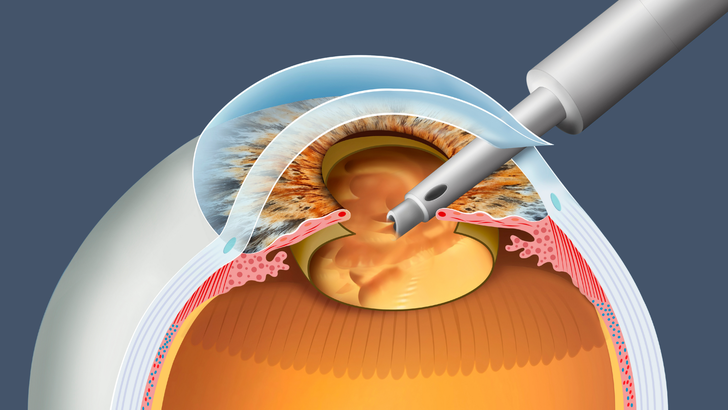
In this segment of Inside the Cataract Studio, Dr. Wendell Scott explores how the Hi-Lo phaco technique, using high vacuum with low ultrasound power, can be applied in both conventional and femtosecond laser-assisted cataract surgery. Dr. Scott also introduces a compression chop technique designed to enhance efficiency and reduce zonular stress, particularly in dense lenses. Through narrated surgical footage and detailed device settings, viewers gain practical insight into tailoring phacoemulsification parameters and instrument use to improve safety, chamber control, and procedural flow across various clinical scenarios.
Using Hi-Lo Phaco With Conventional Surgery and Compression Chop

Dr. Scott:
Welcome, and let's talk a little bit more about some things like cortex removal, how you can use Hi-Lo phaco with really conventional surgery, and a compression chop technique that I think people will find very useful.
I use the Venturi cortex removal because I like the surgeon control, and I do have it at the maximum, but I rarely am using the maximum amount. As you can see, the bottle height is lower, and the vacuum ramp is 1. So the vacuum ramp is actually the slowest ramp, and that's the opposite of how I use the phaco, where it's at the highest ramp. The reason I use the vacuum ramp at the lowest, and why I like to use a low amount of vacuum, is that when the femto-treated lens cortex is being removed, there's a truncated edge cut by the femto laser, and that's what you want to engage. And that can be, I think, tricky for people to realize, initially, where they want to place the aperture of their IA tip.
So for those who have used like, a Simcoe bimanual device, they'll recall that they're using a low amount of aspiration to engage the cortex, but once they get that cortex, they're able to strip that centrally. And this is really the idea in removing the cortex. It's to engage it and to maintain that amount. You don't really need to build high vacuum; it's really more about your engagement of the right part of the cortex.
So we’re going to look at a couple of videos that show this, and they're coming up next.
Here we have a Venturi case where we're using the high aspiration to engage the tip and also using the second instrument to split it, using the vacuum in the second instrument to pull it into the anterior chamber. So this usually will come up as a hemi piece, and you can use both instruments into both, using the tip to push it out and separate it from the cortical adhesions, and then using the vacuum and the chop to pull it into the anterior chamber to get that second half of the lens taken care of.
So you can see the second instrument is between the phaco tip and the capsule. So we're going to go then to using the vacuum. We use a 0.25% Betadine irrigation, and in the aspiration phase, and this will also be in Venturi, we'll go to the edge of the capsulotomy where the cortex has been truncated by the laser cut and go along that edge of the capsule.
Watch the vacuum because, basically, we're using enough vacuum to pull in the cortex, but not just on constantly.
Here, we have some residual cortex, and you can use the polymer tip to basically lift the anterior capsule to get that piece out and complete, really, a good cortical cleanup.
Here, we're going to use the phaco in peristaltic mode, and you'll see it's really very much the same procedure, starting at the temporal lens, going to the center and engaging. The difference is what you see with the aspiration and the vacuum.
So the aspiration is set at a high level but still really requires that high vacuum to pull the lens into it. And the 1% phaco power is also keeping that tip clear. So even though the vacuum is dropping, it's still able to do the same type of removal of the lens, but just maybe not as efficiently.
So in this case, you can see there are a few little fragments. We're getting air at the end. Again, the aspiration flow is less than it would be, say, with the vacuum Venturi, so you really need to look for those little chips. In this case, there's like a dense posterior plaque, and I always use the Venturi mode for the cortical removal. That being said, I mean, you can do it in peristaltic. Being able to control the vacuum and keep it at a level that you want it at from a surgeon perspective, I think is a good thing.
The flexible part about Hi-Lo phaco is that you can use it on conventional cataract surgery. And I know a lot of you are out there saying, don't have a femto or access to a femto. And I do standard surgery. So we're going to look at, basically, how you use it in that setting. And we're also going to be using a chop technique that can really help you improve your efficiency by gaining that initial hemi-fracture of the lens.
So I want to show you a case that has not had any femto grid treatment. This is a dimpled-down technique, and you can see pushing down in the center pulls that capsule in. Now we're going to show you the compression chop technique. Okay? So with the chop and the Beckert, the compressive forces are horizontal, brought to the center, and the lens is split. Okay, so this is non-femto surgery. You can do this with just regular phaco. And when you do this and you're in Venturi mode, watch for the vacuum, okay? The vacuum is quite high and the power is 1% but able to really remove that lens. So the high vacuum, low-power phaco, that's something that's not just for femto. This is also just for regular cataract surgery.
So I start at 1% but you could start at like 10%, and I think rarely you need to go more than 20%, 30%.
This compression chop technique works because you basically are creating opposing forces in the horizontal plane and not in the vertical plane. Those forces are being absorbed by the instruments that you're using in that opposing fashion. So this is great for very dense cataracts, and it can be used in conventional surgery for any density if it has enough nuclear sclerosis. So here's an example of that.
So you can see the chop instrument and the Beckert coming toward each other in the center and then pulling apart. And this can be used for the initial as well as subsequent sections of the lens. And this is a femto lens, but it can be done whether it's femto or not.
So using the two instruments to create these opposing forces, with that force being applied to the lens itself, really helps you decrease zonular stress. And we're going to take a look at a video of an example of this.
So this is a very dense cataract and we have a large capsulotomy diameter. The two instruments are opposing each other, brought to the center, and you see that split go through the lens. So that, and getting that next part of the lenses section, are important in getting this lens out safely.
I do want to make a point about laser cataract surgery, and that is that it took about 20 years for American ophthalmologists to become comfortable with phacoemulsification. And we're now in the process of that with laser cataract surgery. There are definitely cost barriers involved and that kind of thing, but I think in addition to the indications that you see there, I think routine cataract surgery will become more of a thing with laser as the technology advances and as people learn the techniques necessary to really decrease their complication rates and improve the efficiency.
So in these videos, I've been demonstrating how you can split the lens in half and bring half of the lens into the iris plane to apply phacoemulsification at a very low energy. I would suggest that you chop the lens into smaller fragments initially, so that you are better adjusted to the technique before you do the whole hemi-half. And this next video is going to help demonstrate that.
Here's a case where we have the peristaltic settings and we're approaching this lens with the idea of trying to see if we can crack it along that fragment line that you see the phaco tip oriented at. So it's a fairly hard lens and it does crack, and we're able to rotate it into the position we need. But watch how I'm having trouble maintaining purchase, okay? So the aspiration is at the highest, and in the vacuum, occasionally, I'll get a little bit of purchase.
So one of the reasons that I do the femto pattern just for the central nucleus and not the periphery, is because when you're trying to gain lens purchase, it's actually sometimes an advantage to not have the femto treatment part, because where the lens has been treated with the femto, that may come to the tip in pieces, and you may have trouble occluding it totally. Which means, when you're in peristaltic mode, you have trouble building the vacuum.
So in this case, there are sextants, which I've divided into the six pieces, and now bringing out one piece then allows us to really use the second instrument to also facilitate bringing it into the center part, kind of the circle of safety. And you can see gaining purchase with that peripheral part of the lens and then pulling it into the center.
So I think, really, doing this is a good way to start initially, whether you're using—really, Venturi or peristaltic mode is focusing on breaking the lens into sextants and bringing it centrally, maintaining the safety of the second instrument below it, and completing the case in that order.
Well, what I hope we've accomplished with the introduction, setting details, going over cortex removal use with conventional phaco, and also trying to demonstrate this compression technique, is really giving you a way to truly adopt the methodology. So oftentimes, when I see some cool video, I'm like, wow, I wonder how they do that. And gosh, the details just aren't there. And by being very granular in this case and really being very specific, I hope you feel comfortable trying some of these things, whether you're doing conventional surgery or femto surgery.
Certainly, a lot of the techniques apply more to the femto surgery, but I think you definitely can improve your efficiency and safety even with conventional phaco.
So thank you for your attention.
Ready to Claim Your Credits?
You have attempts to pass this post-test. Take your time and review carefully before submitting.
Good luck!
Overview
Disclosure of Relevant Financial Relationships
In accordance with the ACCME Standards for Integrity and Independence, it is the policy of Evolve Medical Education, LLC (Evolve) that faculty and other individuals who are in the position to control the content of this activity disclose any real or apparent financial relationships relating to the topics of this educational activity. Evolve Medical Education, LLC (Evolve) has full policies in place that have identified and mitigated financial relationships and conflicts of interest to ensure independence, objectivity, balance, and scientific accuracy prior to this educational activity.
The following faculty/staff members have reported financial relationships with ineligible companies within the last 24 months.
Faculty:
Wendell J. Scott, MD
Mercy Clinic Eye Specialists
Springfield, MO
Consultant: Johnson & Johnson Vision
Reviewers/Content Planners/Authors:- Cindy Davidson has no relevant relationships to disclose.
- Erika Langsfeld, PhD,has no relevant relationships to disclose.
- Mike Taggart, MD, has no relevant relationships to disclose.
Learning Objectives
Upon completion of this activity, learners should be better able to:
- Manage machine fluidics to enhance chamber stability and minimize complications during cataract surgery
- Formulate strategies and customize phacoemulsification system settings to effectively manage complex cataract cases
Target Audience
This activity has been designed to meet the educational needs of ophthalmologists.
Accreditation and Credit Designation Statements
In support of improving patient care, Global Learning Collaborative (GLC) is jointly accredited by the Accreditation Council for Continuing Medical Education (ACCME), the Accreditation Council for Pharmacy Education (ACPE), and the American Nurses Credentialing Center (ANCC) to provide continuing education for the healthcare team.
Global Learning Collaborative (GLC) designates this enduring activity for a maximum of 0.25 AMA PRA Category 1 Credit(s)™. Physicians should claim only the credit commensurate with the extent of their participation in the activity.Provider(s)/Educational Partner(s)

Evolve Medical Education LLC (Evolve) is a leader in cultivating health care for patients by educating clinical competence of the health care team. Evolve achieves this by developing and distributing high-quality, evidence-based, valid, independent CME/CE activities in a variety of learning formats. These activities are designed to increase clinician’s knowledge, skills, competence and professional performance as well as to promote professional growth, maintenance of licensure, and support quality change in care of patients.Commercial Support
This activity is supported by an independent medical education grant from Johnson & Johnson Surgical Vision Inc.
Disclaimer
The views and opinions expressed in this educational activity are those of the faculty and do not necessarily represent the views of Evolve. This presentation is not intended to define an exclusive course of patient management; the participant should use his/her clinical judgment, knowledge, experience, and diagnostic skills in applying or adopting for professional use any of the information provided herein. Any procedures, medications, or other courses of diagnosis or treatment discussed or suggested in this activity should not be used by clinicians without evaluation of their patients’ conditions and contraindications or dangers in use, review of any applicable manufacturer’s product information, and comparison with recommendations of other authorities. Links to other sites may be provided as additional sources of information.
Reproduction Prohibited
Reproduction of this material is not permitted without written permission from the copyright owner.
The views and opinions expressed in this educational activity are those of the faculty and do not necessarily represent the views of Evolve or Johnson & Johnson Surgical Vision Inc.
This activity is designed for educational purposes. Participants have a responsibility to utilize this information to enhance their professional development to improve patient outcomes. Conclusions drawn by the participants should be derived from careful consideration of all available scientific information. The participant should use his/her clinical judgment, knowledge, experience, and diagnostic decision-making before applying any information, whether provided here or by others, for any professional use.System Requirements
- Supported Browsers (2 most recent versions):
- Google Chrome for Windows, Mac OS, iOS, and Android
- Apple Safari for Mac OS and iOS
- Mozilla Firefox for Windows, Mac OS, iOS, and Android
- Microsoft Edge for Windows
- Recommended Internet Speed: 5Mbps+
Publication Dates
Release Date:
Expiration Date:
Overview
In this segment of Inside the Cataract Studio, Dr. Wendell Scott explores how the Hi-Lo phaco technique, using high vacuum with low ultrasound power, can be applied in both conventional and femtosecond laser-assisted cataract surgery. Dr. Scott also introduces a compression chop technique designed to enhance efficiency and reduce zonular stress, particularly in dense lenses. Through narrated surgical footage and detailed device settings, viewers gain practical insight into tailoring phacoemulsification parameters and instrument use to improve safety, chamber control, and procedural flow across various clinical scenarios.
Disclosure of Relevant Financial Relationships
In accordance with the ACCME Standards for Integrity and Independence, it is the policy of Evolve Medical Education, LLC (Evolve) that faculty and other individuals who are in the position to control the content of this activity disclose any real or apparent financial relationships relating to the topics of this educational activity. Evolve Medical Education, LLC (Evolve) has full policies in place that have identified and mitigated financial relationships and conflicts of interest to ensure independence, objectivity, balance, and scientific accuracy prior to this educational activity.
The following faculty/staff members have reported financial relationships with ineligible companies within the last 24 months.
Faculty:
Wendell J. Scott, MD
Mercy Clinic Eye Specialists
Springfield, MO
Consultant: Johnson & Johnson Vision
Reviewers/Content Planners/Authors:- Cindy Davidson has no relevant relationships to disclose.
- Erika Langsfeld, PhD,has no relevant relationships to disclose.
- Mike Taggart, MD, has no relevant relationships to disclose.
Learning Objectives
Upon completion of this activity, learners should be better able to:
- Manage machine fluidics to enhance chamber stability and minimize complications during cataract surgery
- Formulate strategies and customize phacoemulsification system settings to effectively manage complex cataract cases
Target Audience
This activity has been designed to meet the educational needs of ophthalmologists.
Accreditation and Credit Designation Statements
In support of improving patient care, Global Learning Collaborative (GLC) is jointly accredited by the Accreditation Council for Continuing Medical Education (ACCME), the Accreditation Council for Pharmacy Education (ACPE), and the American Nurses Credentialing Center (ANCC) to provide continuing education for the healthcare team.
Global Learning Collaborative (GLC) designates this enduring activity for a maximum of 0.25 AMA PRA Category 1 Credit(s)™. Physicians should claim only the credit commensurate with the extent of their participation in the activity.Provider(s)/Educational Partner(s)

Evolve Medical Education LLC (Evolve) is a leader in cultivating health care for patients by educating clinical competence of the health care team. Evolve achieves this by developing and distributing high-quality, evidence-based, valid, independent CME/CE activities in a variety of learning formats. These activities are designed to increase clinician’s knowledge, skills, competence and professional performance as well as to promote professional growth, maintenance of licensure, and support quality change in care of patients.Commercial Support
This activity is supported by an independent medical education grant from Johnson & Johnson Surgical Vision Inc.
Disclaimer
The views and opinions expressed in this educational activity are those of the faculty and do not necessarily represent the views of Evolve. This presentation is not intended to define an exclusive course of patient management; the participant should use his/her clinical judgment, knowledge, experience, and diagnostic skills in applying or adopting for professional use any of the information provided herein. Any procedures, medications, or other courses of diagnosis or treatment discussed or suggested in this activity should not be used by clinicians without evaluation of their patients’ conditions and contraindications or dangers in use, review of any applicable manufacturer’s product information, and comparison with recommendations of other authorities. Links to other sites may be provided as additional sources of information.
Reproduction Prohibited
Reproduction of this material is not permitted without written permission from the copyright owner.
The views and opinions expressed in this educational activity are those of the faculty and do not necessarily represent the views of Evolve or Johnson & Johnson Surgical Vision Inc.
This activity is designed for educational purposes. Participants have a responsibility to utilize this information to enhance their professional development to improve patient outcomes. Conclusions drawn by the participants should be derived from careful consideration of all available scientific information. The participant should use his/her clinical judgment, knowledge, experience, and diagnostic decision-making before applying any information, whether provided here or by others, for any professional use.System Requirements
- Supported Browsers (2 most recent versions):
- Google Chrome for Windows, Mac OS, iOS, and Android
- Apple Safari for Mac OS and iOS
- Mozilla Firefox for Windows, Mac OS, iOS, and Android
- Microsoft Edge for Windows
- Recommended Internet Speed: 5Mbps+
Publication Dates
Release Date:
Expiration Date:
Title
Share on ReachMD
CloseProgram Chapters
Segment Chapters
Playlist:
Recommended
We’re glad to see you’re enjoying ReachMD…
but how about a more personalized experience?
